

Православный Крест.
INRI — аббревиатура латинской фразы Iesvs Nazarenvs Rex Ivdæorvm, то есть «Иисус Назарянин, Царь Иудейский» (на церковославянском пишется так : І҆и҃съ назѡрѧни́нъ, цр҃ь і҆ꙋде́йскїй; І.Н.Ц.І.,думаю что вполне читаемо и без специальных знаний.
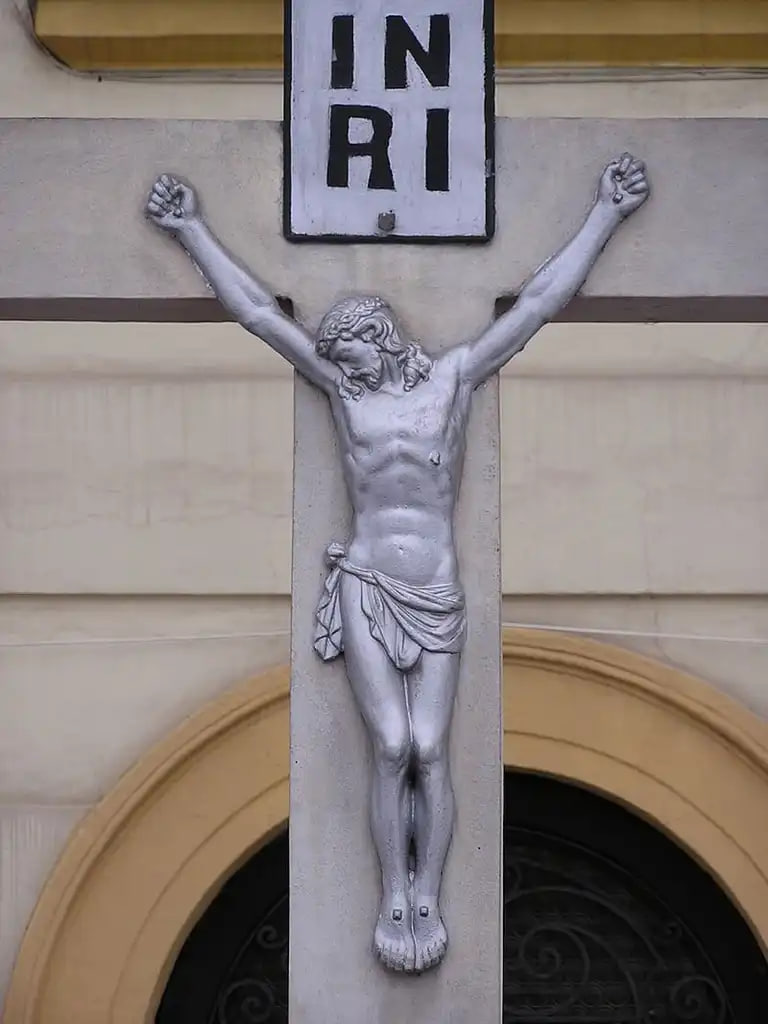
Согласно Новому Завету, первоначально фраза была написана на табличке самим прокуратором Иудеи Понтием Пилатом и прикреплена к кресту, на котором распяли Христа."Пилат же написал и надпись, и поставил на кресте. Написано было: Иисус Назорей, Царь Иудейский.".Евангелие от Матфея..
Сокращение слов или цифр в средневековой письменности называлось "титло".(об этом приеме мы поговорим отдельно,позже)
Что касается надписи "Спаси и сохрани" на обратной стороне наших крестиков,то есть она или нет,не суть важно.Устоявшейся фразы «СПАСИ И СОХРАНИ» не латыни не существует.
Никакого "канона" креста нет.Важна вера,а не атрибуты. Крест «Спаси и Сохрани», стал настолько общепринятыми среди христиан всего мира, что в некоторые периоды времени отсутствие нательного креста могло быть расценено как грех или даже отход от христианства. И не зря с древних времен все священники спрашивали у людей, приходящих на исповедь – «Носишь ли ты крест Христов?
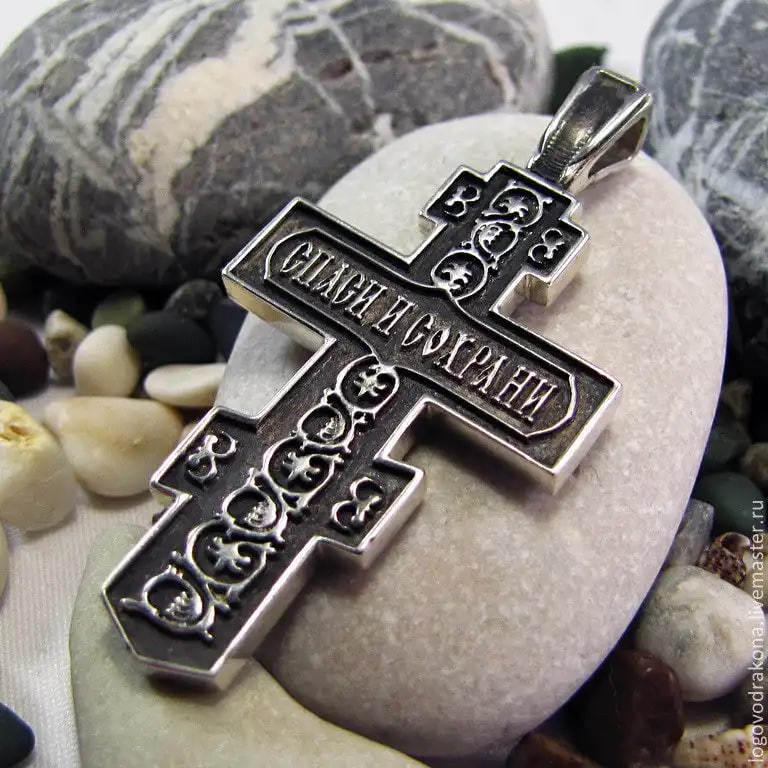
Каждый человек несет по жизни свой крест, и это никак не связано с формой нательного креста, который мы носим.
Наоборот, мы носим на себе образ Креста Христова, чтобы он придавал нам силы в несении своего жизненного креста, наш нательный крестик напоминает нам, что если нести свой крест достойно, за Крестом следует Воскресение.
Господь сказал: «Кто не берет креста своего и следует за Мною, тот не достоин Меня. Сберегший душу свою потеряет ее; а потерявший душу свою ради Меня сбережет ее» (Мф.10,38-39).
Бог есть..
Должен быть..
Orthodox cross.
INRI is an abbreviation of the Latin phrase Iesvs Nazarenvs Rex Ivdæorvm, that is, “Jesus of Nazareth, King of the Jews” (in Church Slavonic it is written like this: И҆и҃съ назѡрѧнснъ, Цр҃ь і҆ꙋДейский; И.Н.Ц.І., I think it’s quite readable even without special knowledge.
According to the New Testament, the phrase was originally written on a tablet by the procurator of Judea Pontius Pilate himself and attached to the cross on which Christ was crucified. “Pilate also wrote the inscription and placed it on the cross. It was written: Jesus of Nazareth, King of the Jews.” Gospel according to Matthew..
The abbreviation of words or numbers in medieval writing was called "titlo". (We will talk about this technique separately, later)
As for the inscription “Save and Preserve” on the back of our crosses, whether it exists or not is not the point. There is no established phrase “Save and Preserve” in Latin.
There is no “canon” of the cross. What is important is faith, not attributes. The “Save and Preserve” cross has become so generally accepted among Christians all over the world that in some periods of time the absence of a cross on the body could be regarded as a sin or even a departure from Christianity. And it’s not for nothing that since ancient times all priests have asked people coming to confession: “Do you wear the cross of Christ?
Each person carries his own cross through life, and this has nothing to do with the shape of the pectoral cross that we wear.
On the contrary, we carry on ourselves the image of the Cross of Christ so that it gives us strength in bearing our life’s cross; our pectoral cross reminds us that if we carry our cross with dignity, the Resurrection follows the Cross.
The Lord said: “Whoever does not take up his cross and follow Me is not worthy of Me. He who saves his soul will lose it; but he who loses his life for My sake will save it” (Matthew 10:38-39).
God exists..
It should be...

 2325.452 SRY